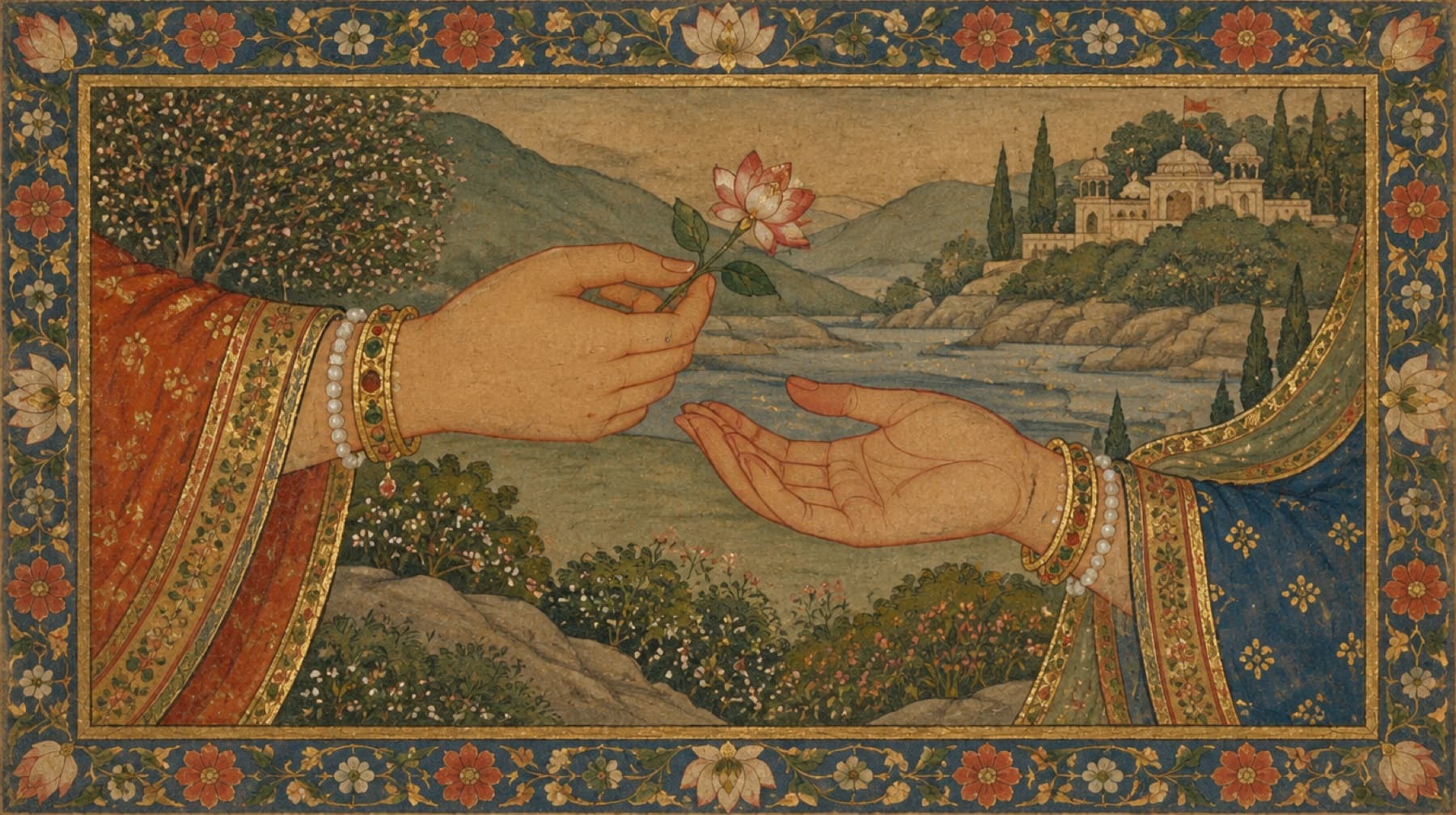
Chapter 12 of 18
The Path of Love
भक्तियोगः
Bhakti Yoga · 20 verses
After the terror of the vision, the shortest and gentlest chapter. Arjuna asks which is better: to love a form you can hold in mind, or the formless. Krishna says the road with a face on it is kinder, then describes what someone who has arrived is actually like to be around.
Where this chapter leaves you
The book's warmest turn. Devotion is offered as the most humanly workable path, with a ladder of smaller steps for anyone who cannot manage the first one.
The verses
20 / 20 explainedChapter 12 · Verse 1
एवं सततयुक्ता ये भक्तास्त्वां पर्युपासते।येचाप्यक्षरमव्यक्तं तेषां के योगवित्तमाः॥
Arjuna said: Those who worship you constantly, joined to you in devotion, and those who worship the imperishable and unmanifest - which of them knows the practice better?
After the vision, a practical question.
Read the explanationChapter 12 · Verse 2
मय्यावेश्य मनो ये मां नित्ययुक्ता उपासते।श्रद्धया परयोपेतास्ते मे युक्ततमा मताः॥
Krishna said: Those who settle their minds on me and worship me, always joined, with the highest faith - I consider them the most joined of all.
He answers immediately and does not hedge.
Read the explanationChapter 12 · Verse 3
ये त्वक्षरमनिर्देश्यमव्यक्तं पर्युपासते।सर्वत्रगमचिन्त्यं च कूटस्थमचलं ध्रुवम्॥
But those who worship the imperishable, which cannot be pointed at, the unmanifest, present everywhere, beyond thought, unchanging, unmoving, fixed…
Six words for what cannot be described, piled up one after another.
Read the explanationChapter 12 · Verse 4
संनियम्येन्द्रियग्रामं सर्वत्र समबुद्धयः।ते प्राप्नुवन्ति मामेव सर्वभूतहिते रताः॥
… holding all their senses in, even-minded everywhere, taking delight in the good of all beings: they reach me too.
Te prāpnuvanti mām eva - they reach me as well.
Read the explanationChapter 12 · Verse 5
क्लेशोऽधिकतरस्तेषामव्यक्तासक्तचेतसाम्।अव्यक्ता हि गतिर्दुःखं देहवद्भिरवाप्यते॥
The trouble is greater for those whose minds are set on the unmanifest. The unmanifest way is reached with difficulty by those who have bodies.
Kleśo 'dhikataraḥ - the difficulty is greater.
Read the explanationChapter 12 · Verse 6
ये तु सर्वाणि कर्माणि मयि संन्यस्य मत्पराः।अनन्येनैव योगेन मां ध्यायन्त उपासते॥
But those who give all their actions over to me, who hold me as highest, who meditate on me with undivided practice and worship me…
The alternative is described, and it is not a technique.
Read the explanationChapter 12 · Verse 7
तेषामहं समुद्धर्ता मृत्युसंसारसागरात्।भवामि नचिरात्पार्थ मय्यावेशितचेतसाम्॥
… for them I become the one who lifts them out of the ocean of dying and being born, before long, Arjuna, since their minds have entered me.
Samuddhartā - the one who lifts out.
Read the explanationChapter 12 · Verse 8
मय्येव मन आधत्स्व मयि बुद्धिं निवेशय।निवसिष्यसि मय्येव अत ऊर्ध्वं न संशयः॥
Place your mind in me alone, let your reason rest in me. From then on you will live in me. Of this there is no doubt.
The direct instruction, given once, plainly.
Read the explanationChapter 12 · Verse 9
अथ चित्तं समाधातुं न शक्नोषि मयि स्थिरम्।अभ्यासयोगेन ततो मामिच्छाप्तुं धनञ्जय॥
If you cannot settle your mind on me steadily, then try to reach me by the practice of repetition, Arjuna.
Atha - if.
Read the explanationChapter 12 · Verse 10
अभ्यासेऽप्यसमर्थोऽसि मत्कर्मपरमो भव।मदर्थमपि कर्माणि कुर्वन् सिद्धिमवाप्स्यसि॥
If you cannot manage even the practice, then make my work your highest aim. Doing your actions for my sake, you will reach completeness.
The second if, and the bar comes down again.
Read the explanationChapter 12 · Verse 11
अथैतदप्यशक्तोऽसि कर्तुं मद्योगमाश्रितः।सर्वकर्मफलत्यागं ततः कुरु यतात्मवान्॥
And if you cannot even do that, taking refuge in joining with me, then give up the fruit of all your actions, with yourself held steady.
The third if, and the last rung.
Read the explanationChapter 12 · Verse 12
श्रेयो हि ज्ञानमभ्यासाज्ज्ञानाद्ध्यानं विशिष्यते।ध्यानात्कर्मफलत्यागस्त्यागाच्छान्तिरनन्तरम्॥
Knowledge is better than practice done by rote. Meditation is better than knowledge. Giving up the fruit of action is better than meditation - and peace follows that giving up at once.
A ranking, and it runs the opposite way to the ladder just given.
Read the explanationChapter 12 · Verse 13
अद्वेष्टा सर्वभूतानां मैत्रः करुण एव च।निर्ममो निरहङ्कारः समदुःखसुखः क्षमी॥
Hating no living being, friendly and kind, free of mine and free of I, the same in pain and in pleasure, patient…
The list of what a devotee is like begins here and runs for seven verses.
Read the explanationChapter 12 · Verse 14
सन्तुष्टः सततं योगी यतात्मा दृढनिश्चयः।मय्यर्पितमनोबुद्धिर्यो मद्भक्तः स मे प्रियः॥
Content, always joined, holding himself steady, firm in what he has decided, with his mind and reason given over to me - that devotee of mine is dear to me.
Santuṣṭaḥ satatam - contented, always.
Read the explanationChapter 12 · Verse 15
यस्मान्नोद्विजते लोको लोकान्नोद्विजते च यः।हर्षामर्षभयोद्वेगैर्मुक्तो यः स च मे प्रियः॥
The one the world is not disturbed by, and who is not disturbed by the world, who is free of delight and resentment and fear and agitation - that one is dear to me.
Both directions, and the first is the unusual one.
Read the explanationChapter 12 · Verse 16
अनपेक्षः शुचिर्दक्ष उदासीनो गतव्यथः।सर्वारम्भपरित्यागी यो मद्भक्तः स मे प्रियः॥
Wanting nothing for himself, clean, capable, uninvolved, untroubled, having given up every undertaking - that devotee of mine is dear to me.
Dakṣa - capable, skilful, good at things.
Read the explanationChapter 12 · Verse 17
यो न हृष्यति न द्वेष्टि न शोचति न काङ्क्षति ।शुभाशुभपरित्यागी भक्तिमान्यः स मे प्रियः॥
Who does not rejoice and does not hate, does not grieve and does not crave, who has given up both the lovely and the unlovely, and is full of devotion - that one is dear to me.
Four negatives and then the one positive.
Read the explanationChapter 12 · Verse 18
समः शत्रौ च मित्रे च तथा मानापमानयोः।शीतोष्णसुखदुःखेषु समः सङ्गविवर्जितः॥
The same toward enemy and friend, the same in honour and dishonour, the same in cold and heat, in pleasure and pain, free of clinging…
The first pair is the hard one.
Read the explanationChapter 12 · Verse 19
तुल्यनिन्दास्तुतिर्मौनी सन्तुष्टो येन केनचित् ।अनिकेतः स्थिरमतिर्भक्तिमान्मे प्रियो नरः॥
The same under blame and praise, quiet, satisfied with whatever comes, with no attachment to a place to live, steady in mind, full of devotion - that person is dear to me.
Aniketaḥ - without a house.
Read the explanationChapter 12 · Verse 20
ये तु धर्म्यामृतमिदं यथोक्तं पर्युपासते।श्रद्दधाना मत्परमा भक्तास्तेऽतीव मे प्रियाः॥
Those who take up this nectar of the lasting way, just as it has been told, with faith, holding me as the highest - those devotees are exceedingly dear to me.
The chapter closes with the warmest line in the book.
Read the explanation