Chapter 7 of 18
Knowing It, and Knowing It
ज्ञानविज्ञानयोगः
Jñāna-vijñāna Yoga · 30 verses
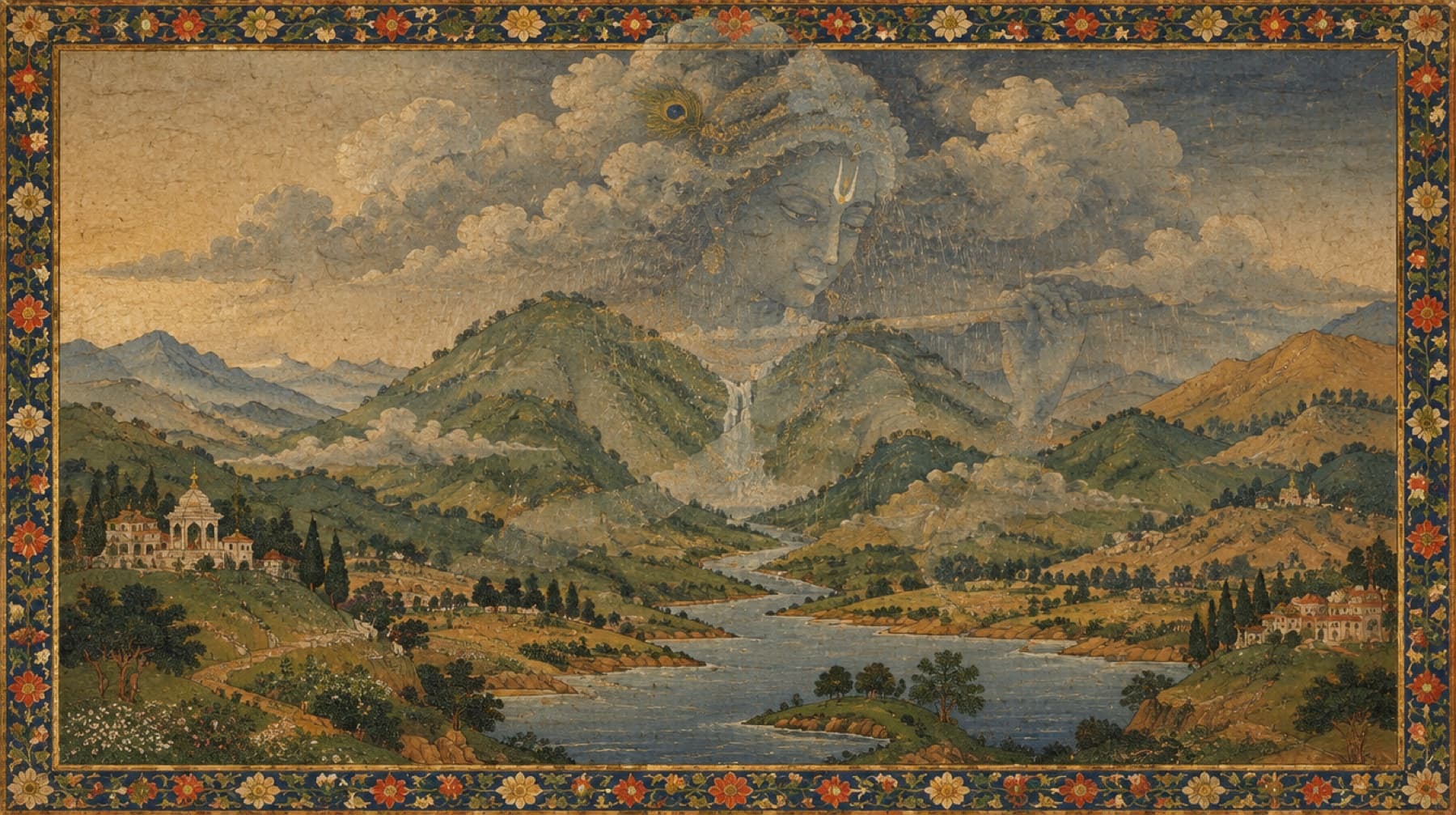
Krishna turns to his own nature - the whole world as his lower form, and something finer behind it. He describes the four kinds of people who turn toward the divine, including, plainly, those who come because they want something.
Where this chapter leaves you
The focus shifts from what to do to who is behind it all. Knowing about something and actually realising it are separated.
The verses
30 / 30 explainedChapter 7 · Verse 1
मय्यासक्तमनाः पार्थ योगं युञ्जन्मदाश्रयः।असंशयं समग्रं मां यथा ज्ञास्यसि तच्छृणु॥
Krishna said: With your mind held to me, Arjuna, practising yoga and taking refuge in me - hear how you will come to know me completely, with nothing left in doubt.
Before he says one word about himself, Krishna sets a condition.
Read the explanationChapter 7 · Verse 2
ज्ञानं तेऽहं सविज्ञानमिदं वक्ष्याम्यशेषतः।यज्ज्ञात्वा नेह भूयोऽन्यज्ज्ञातव्यमवशिष्यते॥
I shall tell you this knowledge in full, together with the living realisation of it. Once you know this, nothing further here remains to be known.
Two claims, both large.
Read the explanationChapter 7 · Verse 3
मनुष्याणां सहस्रेषु कश्चिद्यतति सिद्धये ।यततामपि सिद्धानां कश्चिन्मां वेत्ति तत्त्वतः॥
Among thousands of people, perhaps one strives to be complete. And of those who strive and arrive, perhaps one knows me as I am.
Straight after the promise, a cold number.
Read the explanationChapter 7 · Verse 4
भूमिरापोऽनलो वायुः खं मनो बुद्धिरेव च।अहङ्कार इतीयं मे भिन्ना प्रकृतिरष्टधा॥
Earth, water, fire, air, space, mind, intellect and the sense of being someone - this is my nature, divided eight ways.
Five of these you would expect.
Read the explanationChapter 7 · Verse 5
अपरेयमितस्त्वन्यां प्रकृतिं विद्धि मे पराम्।जीवभूतां महाबाहो ययेदं धार्यते जगत्॥
That is the lower nature. Know my other nature, mighty-armed one - the higher one, the living presence by which this whole world is held up.
Two natures, then.
Read the explanationChapter 7 · Verse 6
एतद्योनीनि भूतानि सर्वाणीत्युपधारय।अहं कृत्स्नस्य जगतः प्रभवः प्रलयस्तथा॥
All beings are born out of these two. I am the origin of this entire world, and I am where it goes.
The two natures together make everything that lives.
Read the explanationChapter 7 · Verse 7
मत्तः परतरं नान्यत्किञ्चिदस्ति धनञ्जय।मयि सर्वमिदं प्रोतं सूत्रे मणिगणा इव॥
There is nothing at all higher than me, Arjuna. All of this is strung upon me, like beads on a thread.
Beads are what you see.
Read the explanationChapter 7 · Verse 8
रसोऽहमप्सु कौन्तेय प्रभास्मि शशिसूर्ययोः।प्रणवः सर्ववेदेषु शब्दः खे पौरुषं नृषु॥
I am the taste in water, Arjuna, and the light in the moon and the sun. I am Om in all the Vedas, sound in space, and the strength in human beings.
A list begins here and runs for four verses.
Read the explanationChapter 7 · Verse 9
पुण्यो गन्धः पृथिव्यां च तेजश्चास्मि विभावसौ।जीवनं सर्वभूतेषु तपश्चास्मि तपस्विषु॥
I am the clean fragrance of the earth and the brightness in fire. I am the life in every living thing, and the effort in those who train themselves.
The list goes on, and it becomes harder to wave away.
Read the explanationChapter 7 · Verse 10
बीजं मां सर्वभूतानां विद्धि पार्थ सनातनम्।बुद्धिर्बुद्धिमतामस्मि तेजस्तेजस्विनामहम्॥
Know me as the seed of all beings, Arjuna - the seed that was always there. I am the sense in those who have sense, and the brilliance of the brilliant.
Bījam - seed.
Read the explanationChapter 7 · Verse 11
बलं बलवतां चाहं कामरागविवर्जितम्।धर्माविरुद्धो भूतेषु कामोऽस्मि भरतर्षभ॥
I am the strength of the strong, free of craving and heat. And in living beings I am desire itself, when it does not run against what is right.
Two careful qualifications in one verse.
Read the explanationChapter 7 · Verse 12
ये चैव सात्त्विका भावा राजसास्तामसाश्च ये।मत्त एवेति तान्विद्धि नत्वहं तेषु ते मयि॥
Whatever states there are - clear, driven or heavy - know that they all come from me. But I am not in them. They are in me.
The three words behind clear, driven and heavy are sattva, rajas and tamas: the three settings everything in nature runs on.
Read the explanationChapter 7 · Verse 13
त्रिभिर्गुणमयैर्भावैरेभिः सर्वमिदं जगत्।मोहितं नाभिजानाति मामेभ्यः परमव्ययम्॥
The whole world is fooled by these three states and does not recognise me, who am beyond them and do not wear out.
Not some people.
Read the explanationChapter 7 · Verse 14
दैवी ह्येषा गुणमयी मम माया दुरत्यया।मामेव ये प्रपद्यन्ते मायामेतां तरन्ति ते॥
This divine play of mine, made of the three states, is very hard to get past. Those who come to me get across it.
Māyā does not mean that nothing is there.
Read the explanationChapter 7 · Verse 15
न मां दुष्कृतिनो मूढाः प्रपद्यन्ते नराधमाः।माययापहृतज्ञाना आसुरं भावमाश्रिताः॥
They do not come to me: those who do harm, those lost in confusion, the lowest of people, whose understanding has been carried off, who have taken the cruel side.
The hardest sentence in a warm chapter.
Read the explanationChapter 7 · Verse 16
चतुर्विधा भजन्ते मां जनाः सुकृतिनोऽर्जुन।आर्तो जिज्ञासुरर्थार्थी ज्ञानी च भरतर्षभ॥
Four kinds of good people turn to me, Arjuna: the one in trouble, the one who wants to understand, the one who wants something, and the one who knows.
Look at who is on the list.
Read the explanationChapter 7 · Verse 17
तेषां ज्ञानी नित्ययुक्त एकभक्तिर्विशिष्यते ।प्रियो हि ज्ञानिनोऽत्यर्थमहं स च मम प्रियः॥
Of these, the one who knows stands out - always joined, devoted to one thing only. I am very dear to that person, and that person is dear to me.
Having just levelled the four, Krishna picks one out.
Read the explanationChapter 7 · Verse 18
उदाराः सर्व एवैते ज्ञानी त्वात्मैव मे मतम्।आस्थितः स हि युक्तात्मा मामेवानुत्तमां गतिम्॥
All of these are noble. But the one who knows is my very self, I hold - settled and joined, that person has come to me as the highest goal.
The correction arrives one verse later.
Read the explanationChapter 7 · Verse 19
बहूनां जन्मनामन्ते ज्ञानवान्मां प्रपद्यते।वासुदेवः सर्वमिति स महात्मा सुदुर्लभः॥
At the end of many births, the one who has come to know surrenders to me, seeing that all this is Vāsudeva. Such a great soul is very hard to find.
Bahūnāṃ janmanām ante - after many births.
Read the explanationChapter 7 · Verse 20
कामैस्तैस्तैर्हृतज्ञानाः प्रपद्यन्तेऽन्यदेवताः।तं तं नियममास्थाय प्रकृत्या नियताः स्वया॥
Those whose understanding has been carried off by this desire or that turn to other gods, keeping this rule or that one, held by their own nature.
The phrase to notice is the last one: prakṛtyā niyatāḥ svayā - held by their own nature.
Read the explanationChapter 7 · Verse 21
यो यो यां यां तनुं भक्तः श्रद्धयार्चितुमिच्छति।तस्य तस्याचलां श्रद्धां तामेव विदधाम्यहम्॥
Whatever form a devotee wishes to worship with faith, I am the one who makes that very faith steady.
He does not correct them.
Read the explanationChapter 7 · Verse 22
स तया श्रद्धया युक्तस्तस्याराधनमीहते।लभते च ततः कामान्मयैव विहितान् हि तान्॥
Joined to that faith, he sets about worshipping that form - and he obtains what he wants, though in truth it is I alone who grant it.
The wishes are actually granted.
Read the explanationChapter 7 · Verse 23
अन्तवत्तु फलं तेषां तद्भवत्यल्पमेधसाम्।देवान्देवयजो यान्ति मद्भक्ता यान्ति मामपि॥
But what such people gain comes to an end - they have not thought it through. Those who worship the gods go to the gods. Those who are mine come to me.
The objection is not that it fails.
Read the explanationChapter 7 · Verse 24
अव्यक्तं व्यक्तिमापन्नं मन्यन्ते मामबुद्धयः ।परं भावमजानन्तो ममाव्ययमनुत्तमम्॥
People without much sense think that I, who am unmanifest, have taken on a form - not knowing my higher nature, unchanging, with nothing above it.
The complaint is about shrinking, not about images.
Read the explanationChapter 7 · Verse 25
नाहं प्रकाशः सर्वस्य योगमायासमावृतः।मूढोऽयं नाभिजानाति लोको मामजमव्ययम्॥
I am not on show to everyone. I am covered over by the play of my own power. This confused world does not recognise me, unborn and unchanging.
Not hidden on purpose, to test anybody.
Read the explanationChapter 7 · Verse 26
वेदाहं समतीतानि वर्तमानानि चार्जुन।भविष्याणि च भूतानि मां तु वेद न कश्चन॥
I know all beings - those gone, those here now, those still to come. But nobody knows me.
Two halves, and the second is unusually bare.
Read the explanationChapter 7 · Verse 27
इच्छाद्वेषसमुत्थेन द्वन्द्वमोहेन भारत।सर्वभूतानि संमोहं सर्गे यान्ति परन्तप॥
From wanting and from hating, from the confusion of opposites, Arjuna, every being goes into a fog from the moment it is born.
Dvandva - the pairs.
Read the explanationChapter 7 · Verse 28
येषां त्वन्तगतं पापं जनानां पुण्यकर्मणाम्।ते द्वन्द्वमोहनिर्मुक्ता भजन्ते मां दृढव्रताः॥
But those whose wrong has come to an end, whose deeds are clean, are released from the confusion of opposites and worship me with a steady vow.
The way out is not described as insight here.
Read the explanationChapter 7 · Verse 29
जरामरणमोक्षाय मामाश्रित्य यतन्ति ये।ते ब्रह्म तद्विदुः कृत्स्नमध्यात्मं कर्म चाखिलम्॥
Those who take refuge in me and work toward freedom from age and death - they come to know that whole ground, and the self, and how action works, completely.
The chapter is closing, and three large words arrive at once.
Read the explanationChapter 7 · Verse 30
साधिभूताधिदैवं मां साधियज्ञं च ये विदुः।प्रयाणकालेऽपि च मां ते विदुर्युक्तचेतसः॥
Those who know me as what stands behind matter, behind the gods, and behind sacrifice - they know me even at the hour of leaving, their minds joined to me.
Three technical words in one line, and Krishna does not stop to explain any of them.
Read the explanation