Chapter 16 of 18
Two Ways to Be a Person
दैवासुरसम्पद्विभागयोगः
Daivāsura-sampad-vibhāga Yoga · 24 verses
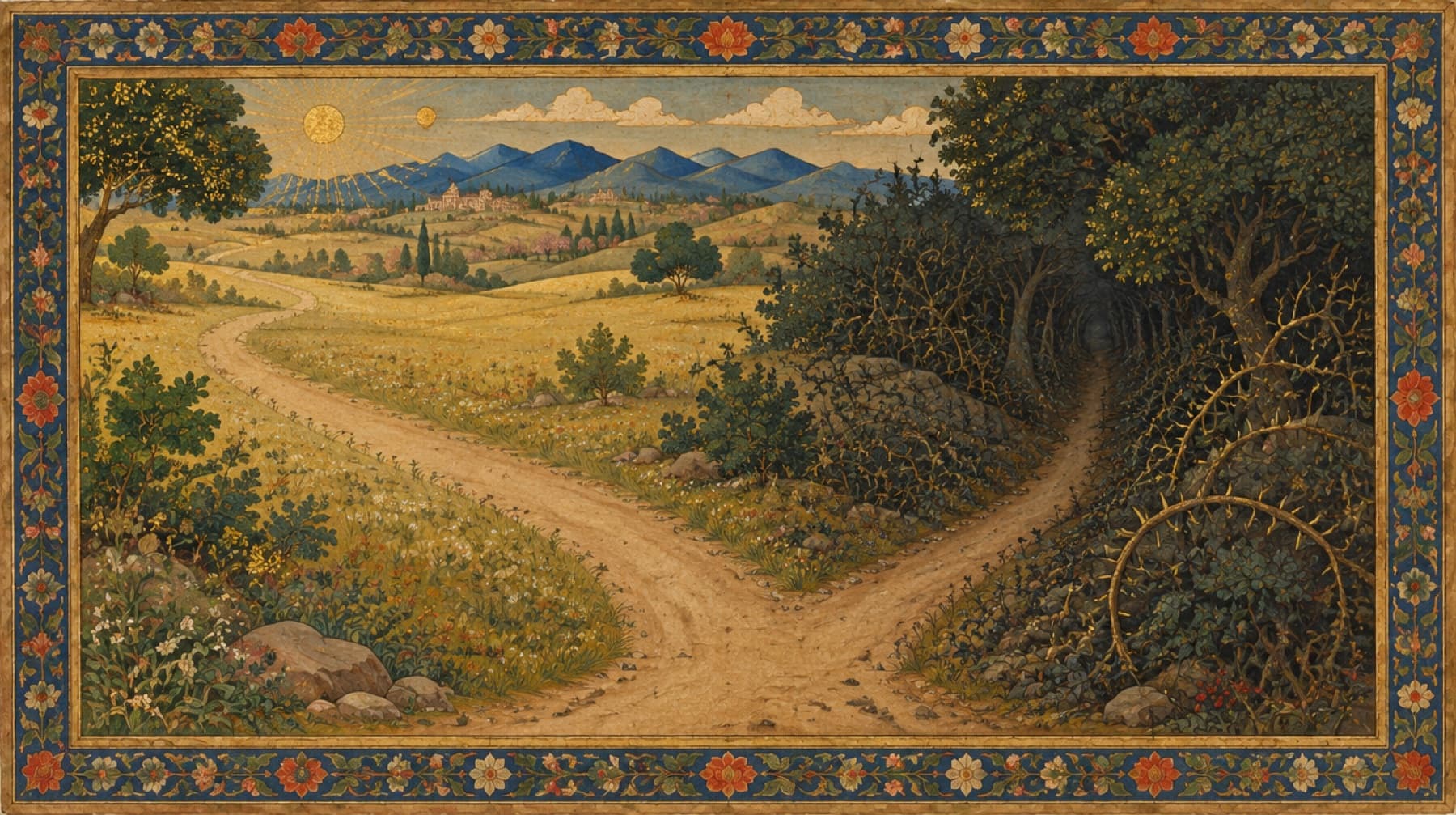
Two sets of qualities are laid side by side. One opens a life out: fearlessness, honesty, patience, no appetite for cruelty. The other closes it down: self-display, anger, the certainty that you are owed. Krishna is blunt about where each leads.
Where this chapter leaves you
The sharpest moral chapter, and the one that most needs reading as description rather than condemnation of particular people.
The verses
24 / 24 explainedChapter 16 · Verse 1
अभयं सत्त्वसंशुद्धिर्ज्ञानयोगव्यवस्थितिः ।दानं दमश्च यज्ञश्च स्वाध्यायस्तप आर्जवम्॥
Fearlessness. A clean heart. Standing firm in knowledge and in practice. Giving, holding the senses, offering, study, hard discipline, being straight with people.
A list begins, and the order of it matters.
Read the explanationChapter 16 · Verse 2
अहिंसा सत्यमक्रोधस्त्यागः शान्तिरपैशुनम्।दया भूतेष्वलोलुप्त्वं मार्दवं ह्रीरचापलम्॥
Not harming. Truth. No anger. Letting go. Peace. Not running people down. Kindness to every living thing. No grabbing. Gentleness, modesty, and no restlessness.
The list goes on, and sitting in the middle of it is an odd one.
Read the explanationChapter 16 · Verse 3
तेजः क्षमा धृतिः शौचमद्रोहो नातिमानिता।भवन्ति सम्पदं दैवीमभिजातस्य भारत॥
Strength, patience, firmness, cleanness, no ill-will, no swagger. These belong to a person born into the divine share, Arjuna.
The list closes with six more, and two of them sit together oddly: strength, and patience.
Read the explanationChapter 16 · Verse 4
दम्भो दर्पोऽभिमानश्च क्रोधः पारुष्यमेव च।अज्ञानं चाभिजातस्य पार्थ सम्पदमासुरीम्॥
Pretending, arrogance, conceit, anger, harshness, not knowing - these belong to a person born into the demonic share, Arjuna.
Six words, against twenty-six.
Read the explanationChapter 16 · Verse 5
दैवी सम्पद्विमोक्षाय निबन्धायासुरी मता।मा शुचः सम्पदं दैवीमभिजातोऽसि पाण्डव॥
The divine share leads to freedom, the demonic one to being tied up. Do not grieve. You are born into the divine share, Arjuna.
Krishna breaks off the lists to say something personal.
Read the explanationChapter 16 · Verse 6
द्वौ भूतसर्गौ लोकेऽस्मिन्दैव आसुर एव च ।दैवो विस्तरशः प्रोक्त आसुरं पार्थ मे शृणु॥
There are two kinds of being made in this world, the divine and the demonic. The divine has been spoken of at length. Hear from me now about the other, Arjuna.
He announces what is coming, which is unusual, and it reads like a warning.
Read the explanationChapter 16 · Verse 7
प्रवृत्तिं च निवृत्तिं च जना न विदुरासुराः।न शौचं नापि चाचारो न सत्यं तेषु विद्यते॥
People in that state do not know what to take up or what to leave alone. There is no cleanness in them, no decent conduct, and no truth.
The first thing named is not cruelty.
Read the explanationChapter 16 · Verse 8
असत्यमप्रतिष्ठं ते जगदाहुरनीश्वरम्।अपरस्परसम्भूतं किमन्यत्कामहैतुकम्॥
They say the world has no truth in it, no ground under it and nobody in charge. It came about by things bumping together. What else is there, they say, except wanting?
This is the one verse in the chapter about a belief rather than a behaviour.
Read the explanationChapter 16 · Verse 9
एतां दृष्टिमवष्टभ्य नष्टात्मानोऽल्पबुद्धयः।प्रभवन्त्युग्रकर्माणः क्षयाय जगतोऽहिताः॥
Holding that view, with themselves lost and their understanding small, they come up with cruel work and set about ruining the world.
Now it turns from belief to damage.
Read the explanationChapter 16 · Verse 10
काममाश्रित्य दुष्पूरं दम्भमानमदान्विताः।मोहाद्गृहीत्वासद्ग्राहान्प्रवर्तन्तेऽशुचिव्रताः॥
They take shelter in a wanting that cannot be filled, full of pretence and pride and swagger. Confused, holding on to things that are not so, they work with dirty intentions.
Kāma here is not simple wanting.
Read the explanationChapter 16 · Verse 11
चिन्तामपरिमेयां च प्रलयान्तामुपाश्रिताः ।कामोपभोगपरमा एतावदिति निश्चिताः॥
They give themselves to worry without measure, worry that ends only when they do, certain that getting what they want is the highest thing and that this is all there is.
A line about anxiety, and it is unusually exact.
Read the explanationChapter 16 · Verse 12
आशापाशशतैर्बद्धाः कामक्रोधपरायणाः।ईहन्ते कामभोगार्थमन्यायेनार्थसञ्चयान्॥
Tied up in a hundred ropes of hope, given over to wanting and anger, they work to pile up money by crooked means, for the sake of getting what they want.
The picture is a hundred ropes, and hope is what they are made of.
Read the explanationChapter 16 · Verse 13
इदमद्य मया लब्धमिमं प्राप्स्ये मनोरथम्।इदमस्तीदमपि मे भविष्यति पुनर्धनम्॥
This much I have got today. This other thing I will get. This is mine, and that money will be mine as well, before long.
Krishna starts quoting.
Read the explanationChapter 16 · Verse 14
असौ मया हतः शत्रुर्हनिष्ये चापरानपि।ईश्वरोऽहमहं भोगी सिद्धोऽहं बलवान्सुखी॥
That rival of mine is finished, and I will finish the others too. I am the one in charge. I am the one who enjoys. I have arrived, I am strong, I am happy.
The voice goes up a level, and the word it reaches for is startling.
Read the explanationChapter 16 · Verse 15
आढ्योऽभिजनवानस्मि कोऽन्योऽस्ति सदृशो मया।यक्ष्ये दास्यामि मोदिष्य इत्यज्ञानविमोहिताः॥
I am rich. I come from good people. Who else is my equal? I will make offerings, I will give to the poor, I will enjoy myself. So they talk, fooled by not knowing.
Here is the part that is genuinely uncomfortable.
Read the explanationChapter 16 · Verse 16
अनेकचित्तविभ्रान्ता मोहजालसमावृताः।प्रसक्ताः कामभोगेषु पतन्ति नरकेऽशुचौ॥
Pulled apart by too many thoughts, wrapped in a net of confusion, stuck fast on the things they want, they fall into a filthy place.
A net is the right picture, and it is not a cage.
Read the explanationChapter 16 · Verse 17
आत्मसम्भाविताः स्तब्धा धनमानमदान्विताः।यजन्ते नामयज्ञैस्ते दम्भेनाविधिपूर्वकम्॥
Full of themselves, stiff-necked, drunk on money and the standing it buys, they make offerings that are offerings in name only - for show, and in no proper way.
Stabdha - stiff.
Read the explanationChapter 16 · Verse 18
अहङ्कारं बलं दर्पं कामं क्रोधं च संश्रिताः।मामात्मपरदेहेषु प्रद्विषन्तोऽभ्यसूयकाः॥
Leaning on self-importance, on force, on swagger, on wanting and anger, they resent me - in their own bodies and in everyone else's.
This is the hardest line in the chapter and it is easy to read straight past.
Read the explanationChapter 16 · Verse 19
तानहं द्विषतः क्रुरान्संसारेषु नराधमान् ।क्षिपाम्यजस्रमशुभानासुरीष्वेव योनिषु॥
Those who hate, who are cruel, the worst of people, bringing nothing good - I throw them again and again, in this turning world, into demonic births.
There is no softening this, and pretending otherwise would be dishonest.
Read the explanationChapter 16 · Verse 20
आसुरीं योनिमापन्ना मूढा जन्मनि जन्मनि ।मामप्राप्यैव कौन्तेय ततो यान्त्यधमां गतिम्॥
Falling into such births one life after another, fooled, never reaching me, they go lower still, Arjuna.
The second half of the hard passage, and then it stops.
Read the explanationChapter 16 · Verse 21
त्रिविधं नरकस्येदं द्वारं नाशनमात्मनः।कामः क्रोधस्तथा लोभस्तस्मादेतत्त्रयं त्यजेत्॥
Three gates open on that ruin, and they destroy a person: wanting, anger, greed. So let a person let go of all three.
After fifteen verses of description, something simple.
Read the explanationChapter 16 · Verse 22
एतैर्विमुक्तः कौन्तेय तमोद्वारैस्त्रिभिर्नरः।आचरत्यात्मनः श्रेयस्ततो याति परां गतिम्॥
Freed from those three gates of darkness, a person does what is actually good for himself, and so goes to the highest place.
Look at what the freed person is said to do.
Read the explanationChapter 16 · Verse 23
यः शास्त्रविधिमुत्सृज्य वर्तते कामकारतः।न स सिद्धिमवाप्नोति न सुखं न परां गतिम्॥
Whoever throws out the measure the scriptures give and acts on impulse instead reaches nothing finished, no happiness, and not the highest place.
A measure from outside yourself, is the argument.
Read the explanationChapter 16 · Verse 24
तस्माच्छास्त्रं प्रमाणं ते कार्याकार्यव्यवस्थितौ।ज्ञात्वा शास्त्रविधानोक्तं कर्म कर्तुमिहार्हसि॥
So let the scriptures be your measure for what is to be done and what is not. Knowing what they lay down, you should act, here, now.
The chapter ends on an instruction, and the last word of it is iha - here.
Read the explanation